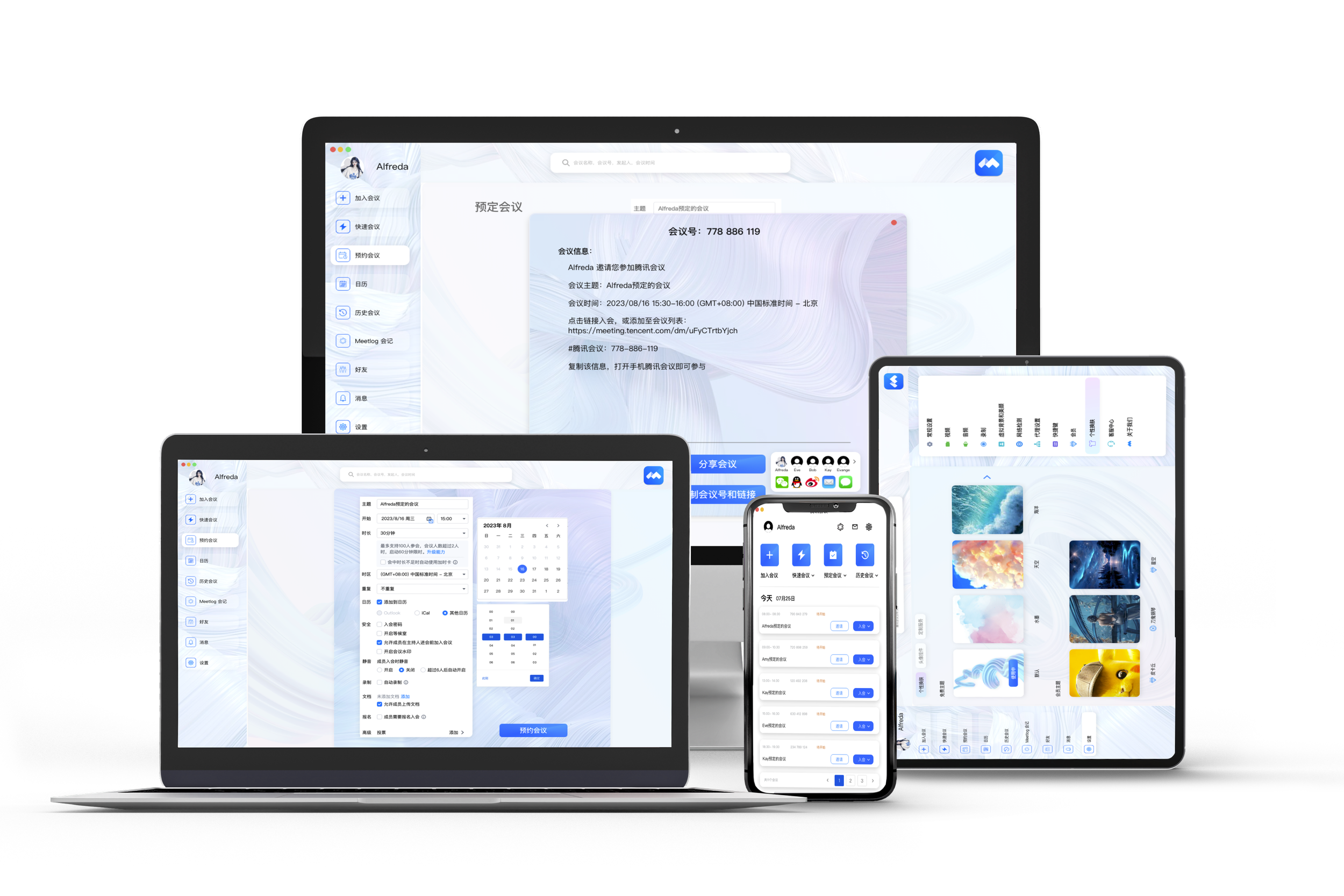
Designing Systems for Human Collaboration
This project rethinks Tencent Meeting as a complex collaboration system rather than a single interface.
Through research and analysis, I identified key usability and system-level issues, including inefficient workflows, unclear interaction patterns, and limited flexibility across devices.
The redesign focuses on improving clarity and reducing friction in communication.
Key improvements include enhanced real-time transcription accuracy, multi-device login support, intelligent meeting summaries, and optimized information architecture for meeting records and file management.
Beyond interface design, this project emphasizes system thinking—connecting user behavior, business logic, and technical feasibility.
The goal is to create a more scalable, intelligent, and user-centered meeting experience.
Designing with AI, Not for AI
This project investigates how AI tools influence the way designers think, create, and iterate.
Using Lovable.dev as a case study, I evaluated whether AI can support designers in completing end-to-end workflows independently.
Through heuristic evaluation, competitive analysis, concept testing, and usability testing, I identified key challenges in AI-assisted design, including unclear mental models, decision fatigue, and lack of user control.
The project goes beyond interface critique—it explores how AI changes the relationship between users and systems.
It highlights the importance of clarity, transparency, and control when designing AI-powered tools, especially for users with different levels of expertise.